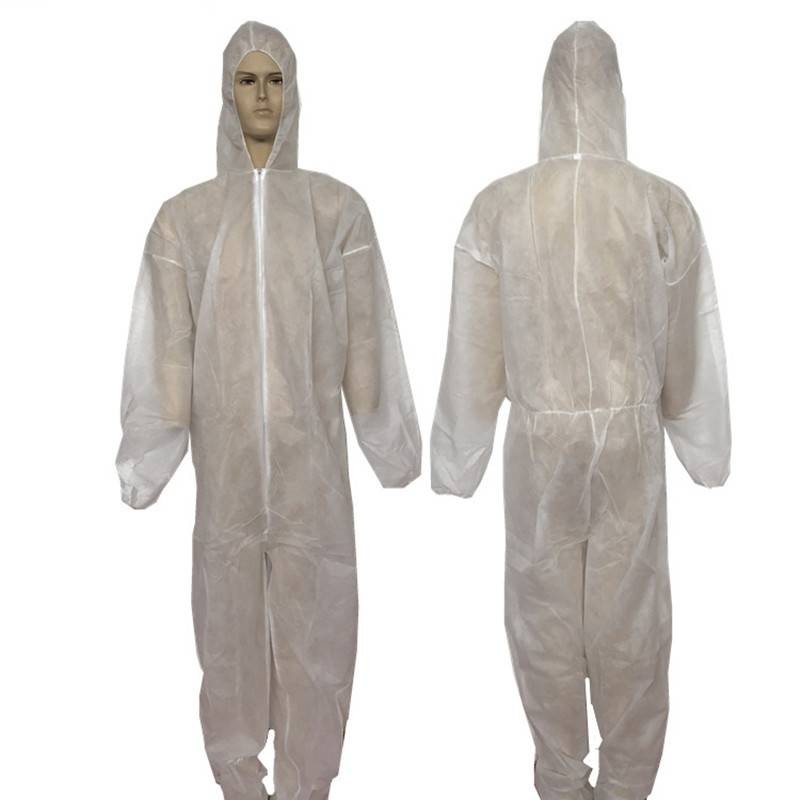
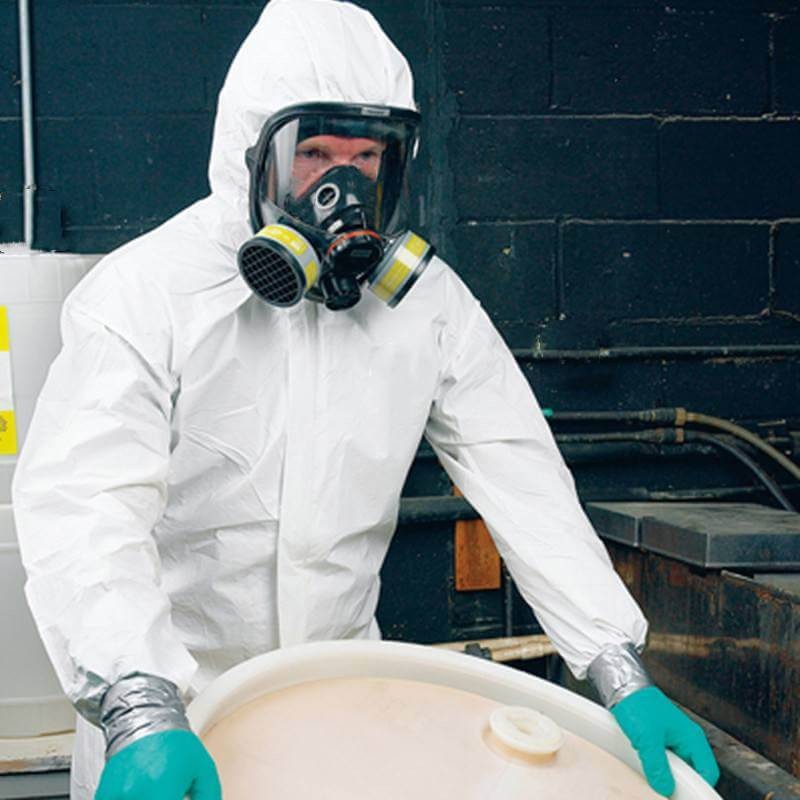
Medical microporous coverall is the work clothes of medical staff to isolate germs, harmful ultrafine dust, acidic solutions, and salt solutions to keep the environment clean. For example, during the "SARS" period, doctors needed to treat patients in a germ environment. In order to prevent germs from spreading to medical staff, they must wear medical microporous coverall when entering the quarantine area.
How to choose microporous coverall? You can refer to the following aspects
Material requirements
The medical microporous coverall is made of PP (polypropylene, 62% of the total) non-woven material, covered with a special breathable film for protective clothing, strong air permeability, anti-static; better impermeability, and high impact resistance . It is non-combustible, non-toxic, non-irritating, and harmless to the skin.
Production characteristics
The microporous coverall is composed of a hooded top and trousers, and can be divided into a conjoined structure and a split structure. The cuffs and ankles are elastically closed, and the face and waist of the hat are elastically closed, drawstring closures or buckles. The fabric must be strong and durable, not easy to be torn and worn, comfortable to wear, light, breathable, lint-free, anti-pollution, and anti-static.
Size type
microporous coverall sizes are divided into M160, L165, XL170, XXL175, 3XL180
Fabric requirements
The breaking strength of the medical microporous coverall fabric should be no less than 45N, the filtration efficiency for non-oily particles should be no less than 70%, the charge amount should be no more than 0.6uC, and the outer water level should be no less than GB/T 4745-1997 grade 3 Request and so on. When the medical staff put it on, due to the tightness, the wearer's body will generate some heat, which should be easily dissipated. If the heat cannot be dissipated, people will feel sultry and affect the wearer’s work. Therefore, the air permeability needs to be good, the surface is smooth, and it will not be contaminated with some chemicals, so as to ensure that the solid dust will not stick, and it can isolate a lot. Toxic bacteria. Medical microporous coverall must also be flame-retardant and not affected by high or low temperature.